
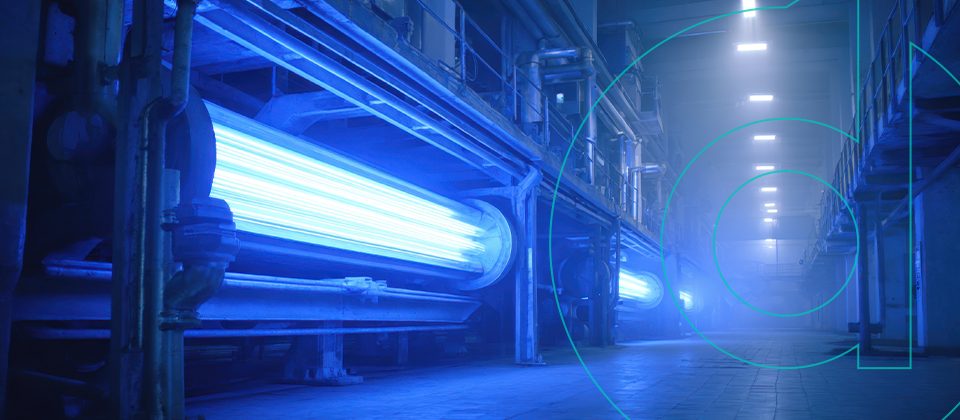
Fluorescent Tube Phase-Out: State-by-State List and How to Stay Ahead
Linear tubes and compact fluorescent lamps (CFLs) have been the standard for office and facility lighting for many years. However, a combination of environmental targets and health concerns has triggered a nationwide legislative shift toward a phase-out of fluorescent tubes. For facility managers and IT directors, this is an immediate supply chain reality. As states enact bans on the sale of general-purpose fluorescent technology, manufacturers are halting production lines well before the legal deadlines.
Get a definitive timeline and state-by-state list of fluorescent tube phase-out. Importantly, understand the steps you must take to upgrade your infrastructure without disrupting operations.
Why Fluorescent Lights Are Disappearing
The move away from fluorescent technology is driven by toxicity risks, carbon-reduction goals and economic efficiency.
Mercury Toxicity Risks
Fluorescent bulbs use mercury vapor to produce light. When these bulbs break or are improperly disposed of, they release this toxic substance into the environment. Mercury is a potent neurotoxin that can affect the brain and kidneys in exposed individuals, causing symptoms like tremors and memory loss. With roughly 75% of fluorescent tubes discarded improperly, the state-by-state phase-out of fluorescent tubes is a critical measure to protect public health.
Carbon Emission Targets
The shift to light-emitting diode (LED) technology is a massive lever for decarbonization. According to industry estimates, banning fluorescents will reduce carbon dioxide emissions by 11.6 million metric tons by 2050 — the equivalent of taking 2.5 million gasoline-powered vehicles off the road for a year.
Economic Drivers
Beyond the environmental impact, the financial case is undeniable. New efficiency standards finalized by the Department of Energy — which cover common commercial lighting types — are projected to save Americans $1.6 billion annually on utility bills.
While these figures include residential data, the impact on businesses is even more significant due to higher daily burn hours. For data centers operating 24/7, the transition from fluorescent to LED technology results in a massive reduction in overhead.
The Supply Chain Reality
Manufacturers typically cease production of noncompliant bulbs months in advance to avoid being left with unsellable inventory. If you rely on a burn-and-replace maintenance strategy, you may find your supplier out of stock long before the law officially goes into effect.
When Are Fluorescents Being Phased Out?
The legislative landscape is fragmented, with states enforcing different deadlines for screw-based CFLs versus pin-based linear tubes. The following timeline aggregates data from the Clean Lighting Coalition and state legislatures.
2024-2025: The First Wave
If your facilities are located in these states, the bans are either already active or imminent. You should stop purchasing new fluorescent stock immediately and begin your retrofit plan. The fluorescent tube phase-out list, state-by-state, is as follows:
- California: The ban on screw-based CFLs and pin-based linear tubes is active, effective January 1, 2024 and January 1, 2025, respectively.
- Vermont: The ban came into effect on January 1, 2024.
- Oregon: The screw-based CFL and linear tube ban has been in place since January 1, 2025.
- Rhode Island: Since January 1, 2024, there has been a ban on CFL, while the linear ban came into effect on January 1, 2025.
- Maine: The ban on CFLs has been in effect since January 1, 2025, and the linear ban will take effect on January 1, 2026.
- Colorado: Environmental Standards for Appliances HB23-1161 set the ban for January 1, 2025.
- Hawaii: The ban has been in force since January 1, 2025.
- Minnesota: Legislation that prohibits the sale of new screw-based CFLs started January 1, 2025, with linear tubes following in 2026.
2026-2027: The Second Wave
Facilities in these regions have a brief window to plan, but early action is recommended to lock in utility rebates:
- Illinois: Under the Clean Lighting Act HB2363, the sale of screw-based CFLs was prohibited from January 1, 2026, followed by pin-based linear tubes in 2027.
- High-CRI exemptions: In some jurisdictions, specialized High-CRI, or color rendering index, linear tubes are eligible for extended deadlines. However, these exemptions are temporary and should not delay your broader infrastructure upgrade.
The Watch List
Legislative momentum is building rapidly. Facility managers in Maryland, Massachusetts and Nevada should treat the phase-out as inevitable:
- Maryland: The Prohibition Bill HB0747 has been introduced to prohibit the sale of mercury-containing lamps. While not yet enacted, it signals a clear intent.
- Massachusetts and Nevada: Similar legislation is under consideration. In Nevada, prior sessions have seen bills aimed at energy efficiency standards, creating a regulatory environment where a future ban is highly likely.
4 Hidden Costs of Delaying Your Retrofit
Waiting until the last bulb burns out is a high-risk strategy. Delaying your transition to LED exposes your organization to several compounding costs.
1. Rising Maintenance Costs
As production dwindles, the law of supply and demand takes over. The cost of remaining fluorescent stock will likely spike as distributors clear out their final inventory, driving up your maintenance budget for an obsolete technology.
2. Compliance and Disposal Fines
Disposing of mercury-laden tubes is not as simple as throwing them in a dumpster. Used and broken CFLs may be restricted from normal trash disposal by your regional environmental regulatory authorities. Sending mercury-containing lamps to landfills is not allowed in these states:
- California
- Maine
- Massachusetts
- New Hampshire
- Vermont
- Washington
Strict Universal Waste regulations require documented, safe recycling. Failure to comply can result in significant fines from the United States Environmental Protection Agency (EPA).
3. Energy Inefficiency
For data centers and server rooms, heat is the enemy. Fluorescent tubes emit significantly more heat than LEDs, forcing your cooling systems to work harder. Switching to LED lighting lowers your lighting bill and optimizes data center cooling by reducing thermal load in your critical environments.
4. Fragmented Facilities
Managing a multistate footprint with different lighting standards is an operational challenge. If you have sites in California, which has banned fluorescent tubes, and in Maryland, with a pending prohibition bill, maintaining different supply chains for lighting is inefficient and costly.
How to Navigate the Phase-Out Without Disruption
To ensure compliance and maintain uptime, follow this strategic roadmap:
- Conduct a comprehensive lighting audit: Identify which fixtures are compatible with Type A plug-and-play LED tubes and which require a Type B, ballast bypass or retrofit. This prevents compatibility issues that can leave areas in the dark.
- Prioritize high-burn areas: Start your retrofit in areas that operate 24/7, such as data halls, security command centers and stairwells. These areas offer the highest return on investment (ROI) through energy savings.
- Understand rebate expirations: Utility companies offer lucrative rebates for switching to LED. However, these incentives are often tied to energy efficiency goals. Once a technology like fluorescent is legally banned, it becomes the standard, and rebates for replacing it often disappear. Acting now allows you to capture these funds before they expire.
- Plan for hazardous waste disposal: You must have a plan for the old tubes. Partner with a certified recycler who can provide a recycling certificate. This ensures you are indemnified against future environmental liability.
Future-Proof Your Infrastructure With DataSpan
At DataSpan, we view lighting as a critical component of your facility’s infrastructure. We move beyond simple product fulfillment to offer turnkey project management for your entire lighting upgrade, including:
- Detailed site assessments to maximize utility rebates.
- Photometric layouts that ensure proper light levels for safety and productivity.
- Coordination with certified installers to minimize disruption.
- Compliant disposal of all legacy mercury lamps.
We understand the unique constraints of mission-critical environments. Our team designs customized power solutions that improve efficiency without risking downtime or causing heat spikes in your server rows.
Whether you are managing a single site in Illinois or a distributed network across Nevada, Massachusetts and Minnesota, DataSpan provides a single point of contact for your national compliance strategy.
The fluorescent phase-out is no longer a prediction — it is a timeline. With states already enforcing bans and others likely to follow, the window to plan a strategic, cost-effective retrofit is closing.
Contact a DataSpan specialist today to schedule your facility audit and secure your transition to a cleaner, more efficient future.
Linked Sources:
- https://www.epa.gov/mercury/health-effects-exposures-mercury
- https://environmentamerica.org/articles/saying-farewell-to-fluorescents/
- https://www.aceee.org/blog-post/2023/08/five-more-states-are-phasing-out-fluorescent-bulbs
- https://www.energy.gov/articles/doe-finalizes-efficiency-standards-lightbulbs-save-americans-billions-household-energy
- https://dataspan.com/blog/5-data-center-lighting-considerations/
- https://www.clasp.ngo/campaign/clean-lighting-coalition/
- https://leg.colorado.gov/bills/hb23-1161
- https://www.ilga.gov/Legislation/BillStatus?DocNum=2363&GAID=17&DocTypeID=HB&SessionID=112&GA=103
- https://mgaleg.maryland.gov/mgawebsite/Legislation/Details/hb0747?ys=2024rs
- https://www.epa.gov/mercury/recycling-and-disposal-cfls-and-other-bulbs-contain-mercury
- https://www.epa.gov/hw/universal-waste
- https://dataspan.com/blog/led-lighting-in-data-centers/
- https://dataspan.com/data-center/cooling-solutions/
- https://briteswitch.com/news/fluorescent-tube-bans-and-rebates.php
- https://dataspan.com/data-center/power-solutions/
- https://dataspan.com/contact-us/

About the Author: Alex von Hassler’s long term focus is the continued testing, learning, and deployment of modern IT solutions. During his years as a DataSpan team member, his responsibilities grew from managing Salesforce CRM to improving system security, creating marketing initiatives, as well as providing continued support to the highly motivated and experienced team in an ever-changing industry. As DataSpan evolves to provide the best-fitting IT solutions to its customers, Alex von Hassler continues to hone his skills in the world of web-based ERP systems, security, and best customer engagement practices. Empowering such a dynamic team with the right tools provides him with enormous gratification.